Hey there, fellow heat-beaters! As someone who’s spent over a decade deep in the world of handheld fans, I’ve seen them evolve from flimsy gadgets to genuine personal cooling powerhouses. And let’s be honest, when the mercury rises, you’re not just looking for any fan; you’re looking for a strong handheld fan that can truly deliver a refreshing blast of air when you need it most. Here at Reacr.com, we’re all about empowering you with the knowledge to make the best choices, and when it comes to battling the heat, an underpowered fan just won’t cut it.
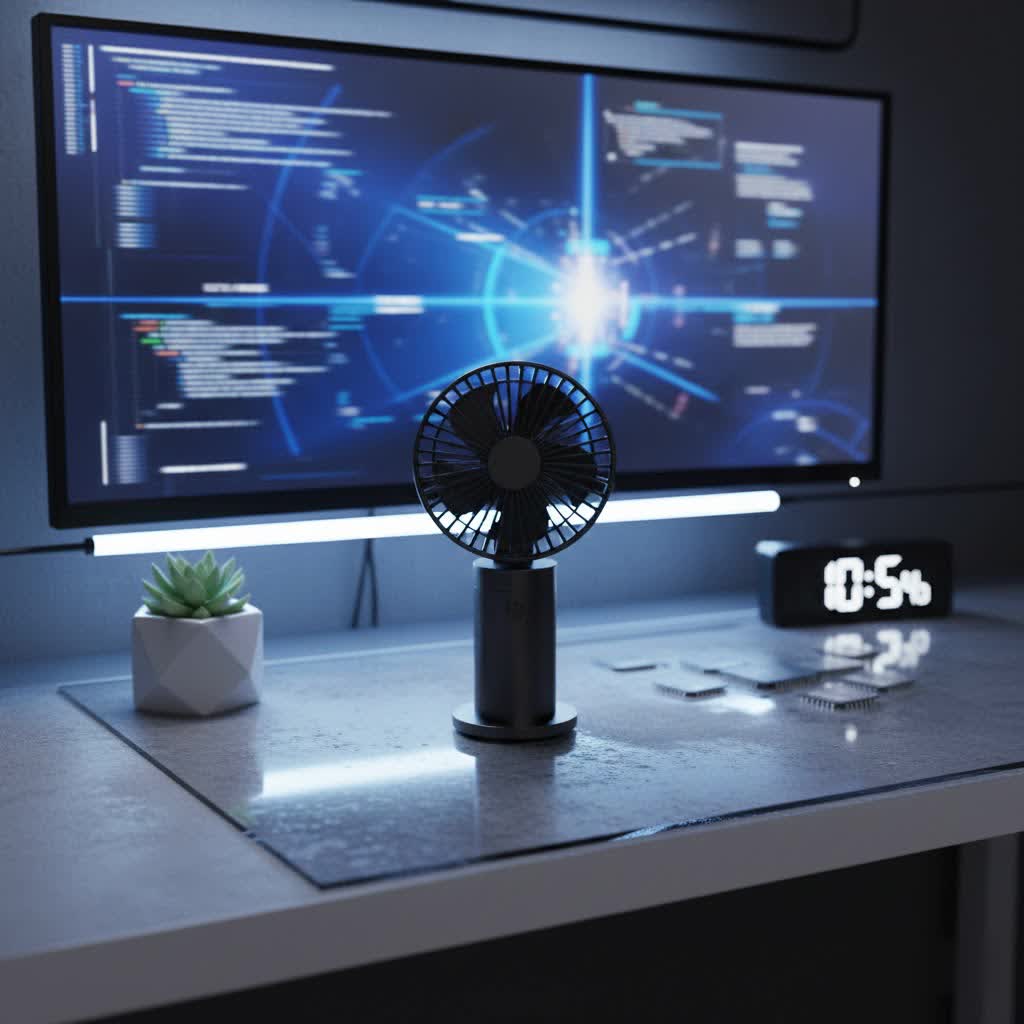
So, what exactly makes a handheld fan “strong,” and how can you navigate the market to find your ultimate portable cooling companion? Let’s dive in and demystify the tech behind that powerful breeze.
What Exactly Powers a Strong Handheld Fan?
When you feel that invigorating gust of air from a handheld fan, it’s not magic – it’s engineering! Several key components work in harmony to deliver that impressive airflow. Understanding these factors is crucial when you’re on the hunt for a truly powerful device.
The Heart of the Breeze: Motor Type and RPM
|
Our Picks for the Best Handheld Fan in 2026
As an Amazon Associate I earn from qualifying purchases.
|
||
| Num | Product | Action |
|---|---|---|
| 1 | Momcozy Portable Stroller Fan, 8000mAh, 27H Ultra-long Battery Life, Detachable 4 Speed 360°Rotate, LED Night Light with 2 Modes, USB Rechargeable Handheld Cooling Fan for Travel, Car Seat, Bedroom |

|
| 2 | JISULIFE Portable Handheld Turbo Fan [16H Max Cooling Time], 4000mAh USB Rechargeable Personal Battery Operated Lash Small Pocket Fan with 5 Speeds for Travel/Outdoor/Vacation/Concerts - White |
|
| 3 | Momcozy Portable Stroller Fan, 8000mAh, 27H Ultra-long Battery Life, Detachable 4 Speed 360°Rotate, LED Night Light with 2 Modes, USB Rechargeable Handheld Cooling Fan for Travel, Car Seat, Bedroom |
|
| 4 | JISULIFE Handheld Portable Turbo Fan [16H Max Cooling Time], 4000mAh USB Rechargeable Personal Battery Operated Mini Small Pocket Fan with 5 Speeds for Travel/Outdoor/Vacation/Concerts - Brown |
|
| 5 | Momcozy Portable Stroller Fan, 8000mAh, 27H Ultra-long Battery Life, Detachable 4 Speed 360°Rotate, LED Night Light with 2 Modes, USB Rechargeable Handheld Cooling Fan for Travel, Car Seat, Bedroom |
|
| 6 | Momcozy Portable Stroller Fan, 8000mAh, 27H Ultra-long Battery Life, Detachable 4 Speed 360°Rotate, LED Night Light with 2 Modes, USB Rechargeable Handheld Cooling Fan for Travel, Car Seat, Bedroom |
|
| 7 | JISULIFE Portable Handheld Turbo Fan [16H Max Cooling Time], 4000mAh USB Rechargeable Personal Battery Operated Lash Small Pocket Fan with 5 Speeds for Travel/Outdoor/Vacation/Concerts - Green |
|
| 8 | Momcozy Portable Stroller Fan, 8000mAh, 27H Ultra-long Battery Life, Detachable 4 Speed 360°Rotate, LED Night Light with 2 Modes, USB Rechargeable Handheld Cooling Fan for Travel, Car Seat, Bedroom |
|
| 9 | Momcozy Portable Stroller Fan, 8000mAh, 27H Ultra-long Battery Life, Detachable 4 Speed 360°Rotate, LED Night Light with 2 Modes, USB Rechargeable Handheld Cooling Fan for Travel, Car Seat, Bedroom |
|
| 10 | JISULIFE Portable Handheld Turbo Fan [18H Max Cooling Time], 6000mAh USB Rechargeable Personal Battery Operated Lash Small Pocket Fan with 5 Speeds for Travel/Outdoor/Vacation/Concerts- Black |
|
At the core of any strong handheld fan is its motor. You’ll often hear about high-speed motors and RPM (Revolutions Per Minute), and these are vital metrics. A high-quality motor, particularly a brushless DC (BLDC) motor, is designed for efficiency and can spin fan blades at much higher speeds than cheaper alternatives. For instance, some top-tier models boast motors reaching 13,500 RPM or even up to 19,000 RPM, which translates directly into significantly stronger airflow. Think of it like a sports car engine: more RPM generally means more power. This translates into a feeling that’s more akin to a small desk fan rather than just a gentle whisper of air.
Airflow Metrics: CFM and Wind Speed
While RPM tells you how fast the blades spin, CFM (Cubic Feet per Minute) and wind speed (m/s) are the real indicators of how much air a fan actually moves. Unfortunately, not all manufacturers openly list CFM, but when they do, it’s a golden nugget of information. A fan pushing a high CFM (like one reviewed at 71 CFM at top speed) will provide a far more impactful cooling experience. Similarly, wind speeds of 10m/s can feel incredibly powerful, offering immediate relief in sweltering conditions. These metrics confirm that a fan isn’t just making noise; it’s actively displacing a large volume of air to cool you down effectively.
The Blade Factor: Design and Efficiency
It’s not just about how fast the motor spins; the design of the fan blades and the fan ducting play a huge role. Larger, aerodynamically efficient blades, combined with optimized ducting, can push more air with less wasted energy. Some advanced designs even incorporate “turbo airflow” mechanisms or air jet expansion technology to maximize output. While some prefer bladeless designs for safety and aesthetics, bladed fans generally offer a stronger direct airflow at a lower cost.
Beyond Raw Power: Key Features for Optimal Performance
A truly strong handheld fan isn’t just about how much air it moves; it’s about how effectively and conveniently it delivers that power. Here are the features you should definitely consider:
Battery Life and Capacity: Powering Your Adventures
What’s the point of a powerful fan if it dies on you after an hour? Battery capacity, measured in mAh (milliampere-hours), is paramount. For general commuting, 2000-3000 mAh might suffice for a few hours on low speed. But for extended use, like outdoor festivals, long travels, or all-day cooling, you’ll want 4000 mAh or even 5000-9000 mAh batteries, which can provide up to 12-25 hours of runtime on lower settings.
“Don’t underestimate the importance of battery capacity,” advises Clara Jensen, our lead product analyst at Reacr.com. “A powerful fan drains faster, so a robust battery ensures your cooling relief isn’t cut short.”
Look for USB-C charging, as it’s faster and more universally compatible with modern devices. Some fans even double as a power bank, offering emergency charging for your phone – a truly useful feature when you’re off-grid.
Adjustable Speed Settings: Precision Cooling
A strong fan needs versatility. Look for models with multiple speed settings, ideally four or more, or even a stepless speed control (like 100 levels) that allows for fine-tuning the airflow. This way, you can switch from a gentle breeze indoors to a full-on turbo blast when facing intense heat outdoors. The ability to customize your comfort level is key.
Portability and Ergonomics: Your On-the-Go Companion
Even the strongest fan needs to be practical to carry. Consider the weight and dimensions. A fan under 200 grams is generally comfortable for extended handheld use. Features like foldable handles, detachable stands, or integrated lanyards add to its versatility, allowing it to transition seamlessly from handheld to desk fan or even a wearable device.
Noise Level: The Sound of Silence (or Not)
This is the classic trade-off: more power often means more noise. While some powerful fans can be quite loud on their highest settings (over 70 dB), many modern designs incorporate brushless motors and clever housing to minimize noise. If you plan to use your fan in quiet environments like an office, library, or bedroom, aim for models that operate at ≤40 dB on lower settings. Digital displays showing speed and battery level are also handy for managing performance.
Build Quality and Safety: Durability You Can Trust
A strong fan should also be a durable fan. Look for sturdy construction with tight grilles to protect fingers and hair, especially if children will be using it. High-quality materials like ABS plastic contribute to longevity. Some fans even include safety switches to prevent accidental activation in your bag.
Choosing Your Powerhouse: Scenarios and Recommendations
Now that you know what to look for, let’s consider how these factors apply to different cooling needs:
For the Outdoor Adventurer or Festival-Goer: Maximum Blast
If you’re battling scorching sun at a concert, hiking a challenging trail, or simply enjoying outdoor sports, you need maximum airflow. Prioritize fans with the highest RPM and CFM ratings. Look for models explicitly marketed as “turbo fans” or “high-speed fans.” While these might be slightly louder or bulkier, their cooling power will be worth it. A 4000-5000 mAh battery is essential to ensure it lasts through your adventures.
For the Commuter or Traveler: Balanced Performance
When you’re navigating crowded public transport or dealing with stuffy airplane cabins, you need a fan that’s powerful yet discreet. A good balance of strong airflow, quiet operation on lower settings, and long battery life is crucial. Foldable designs that double as desk fans are a bonus for hotel rooms or airport lounges. USB-C charging and a power bank feature can be lifesavers on long journeys.
For Office & Study: Quiet Efficiency
Working or studying in a warm environment requires a fan that provides noticeable cooling without being a distraction. Focus on models with brushless motors and noise levels below 40 dB. While sheer power might not be the top priority, steady, consistent airflow is important. Features like a stable base or rubberized feet will prevent vibrations on your desk.
Expert Insight: “It’s All About the Motor”
“Many people focus on battery life or design, but if you want a truly strong handheld fan, it all starts with the motor,” explains Dr. Alex Chen, a materials science engineer and fan technology expert. “A high-quality, high-RPM brushless motor is the fundamental difference between a gentle breeze and a powerful gust. This technology allows for greater airflow efficiency and, often, a longer product lifespan, even if it comes with a slightly higher price tag.”
FAQs About Strong Handheld Fans
Q1: How can I tell if a handheld fan is truly powerful before buying?
A: Look for specifications like RPM (Revolutions Per Minute) of the motor, CFM (Cubic Feet per Minute) for airflow, or explicit wind speed ratings (e.g., 10m/s). Higher numbers in these specs usually indicate stronger performance. Reviews often highlight models with “turbo airflow” or “maximum power.”
Q2: Do more speed settings always mean a stronger fan?
A: Not necessarily. While multiple speed settings offer versatility, the top speed and the underlying motor’s power are what determine ultimate strength. A fan with 100 speed levels but a weak motor won’t be as strong as a fan with 5 speeds but a high-RPM motor.
Q3: Why are powerful handheld fans often louder?
A: Moving a larger volume of air at higher speeds requires more energy and creates more air turbulence, leading to increased noise. High-RPM motors, while powerful, inherently generate more sound. Brushless motors can help mitigate this, but a truly strong fan will likely be audible on its highest settings.
Q4: How much battery capacity (mAh) do I need for a strong handheld fan?
A: For consistent strong performance, aim for a battery capacity of 4000 mAh or higher. Powerful fans consume more energy, so a larger battery ensures you get sufficient runtime on higher speed settings.
Q5: Can a strong handheld fan also be quiet?
A: It’s a balance. Some manufacturers have engineered powerful fans with brushless motors and optimized designs that offer impressive airflow while keeping noise levels relatively low on medium settings (around 40-50 dB). However, maximum power settings on almost any strong fan will produce noticeable noise.
The Final Breeze: Stay Cool, Stay Empowered
Choosing a strong handheld fan is about more than just grabbing the first one you see. It’s about understanding the science of airflow, recognizing the importance of a robust motor and battery, and matching those features to your specific cooling needs. At Reacr.com, we believe in arming you with this knowledge so you can confidently select a personal cooling device that genuinely makes a difference.
So, go ahead, embrace the power of a strong handheld fan, and enjoy that refreshing blast of air wherever life takes you. Do you have a favorite powerful fan, or perhaps a burning question we didn’t cover? Share your experiences and keep the conversation going – because staying cool should always be an empowering experience!
